
announcements
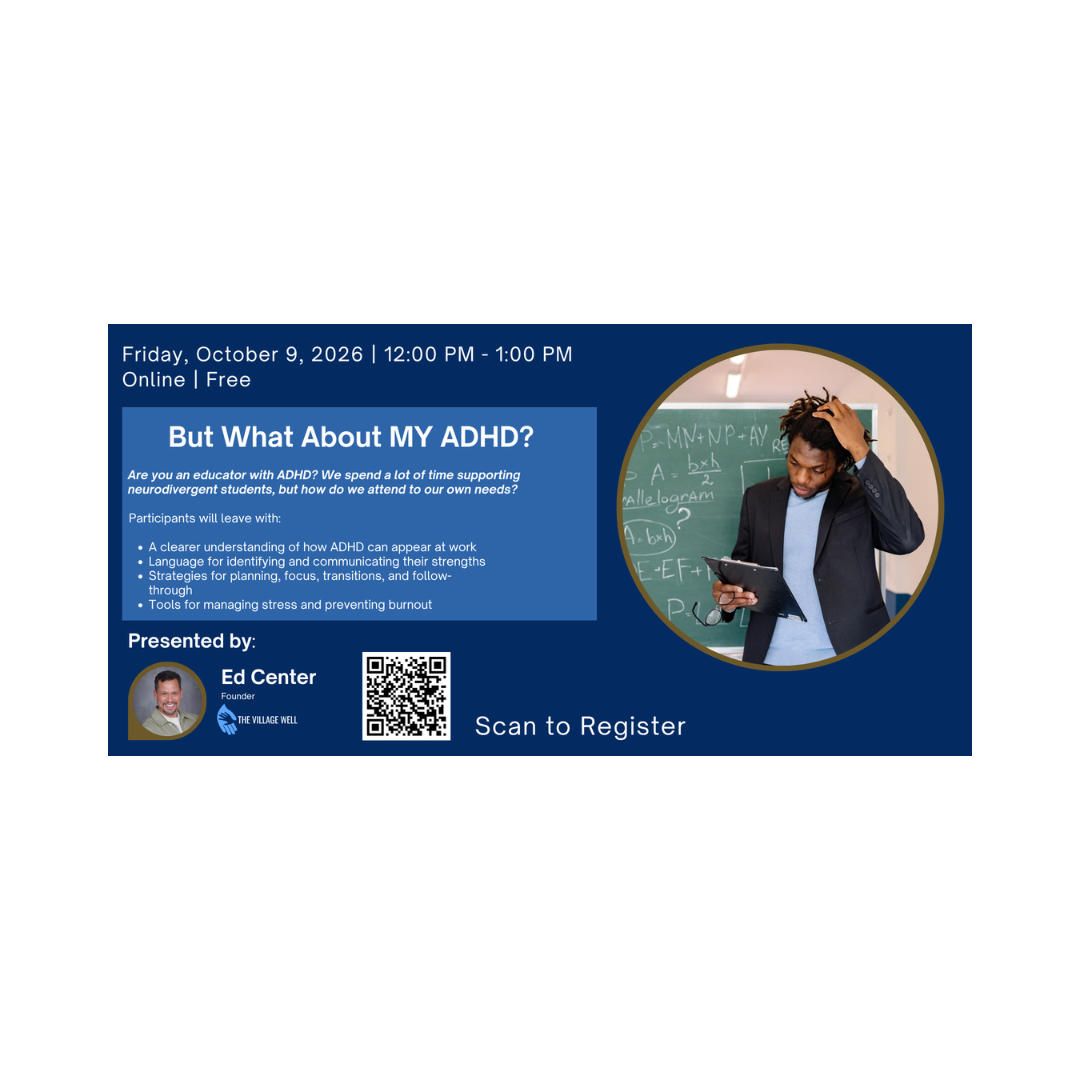
But What About MY ADHD?
Friday, October 9 | 12:00 PM to 1:00 PM PST
Online
Are you an educator with ADHD? We spend a lot of time supporting neurodivergent students, but how do we attend to our own needs?
This engaging, affirming workshop explores how the ADHD brain shows up at work (and sometimes leaves without clocking out). We’ll cover common strengths and challenges, and how to take care of yourself on the job. No formal diagnosis is required. Grab your favorite fidget toy and join us for an hour of exploring what you need to thrive at work.
Participants will leave with:
A clearer understanding of how ADHD can appear at work
Language for identifying and communicating their strengths
Strategies for planning, focus, transitions, and follow-through
Tools for managing stress and preventing burnout
Ways to ask coworkers and supervisors for effective support
Coz there ain’t no party like an ADHD… wait… what was I talking about?
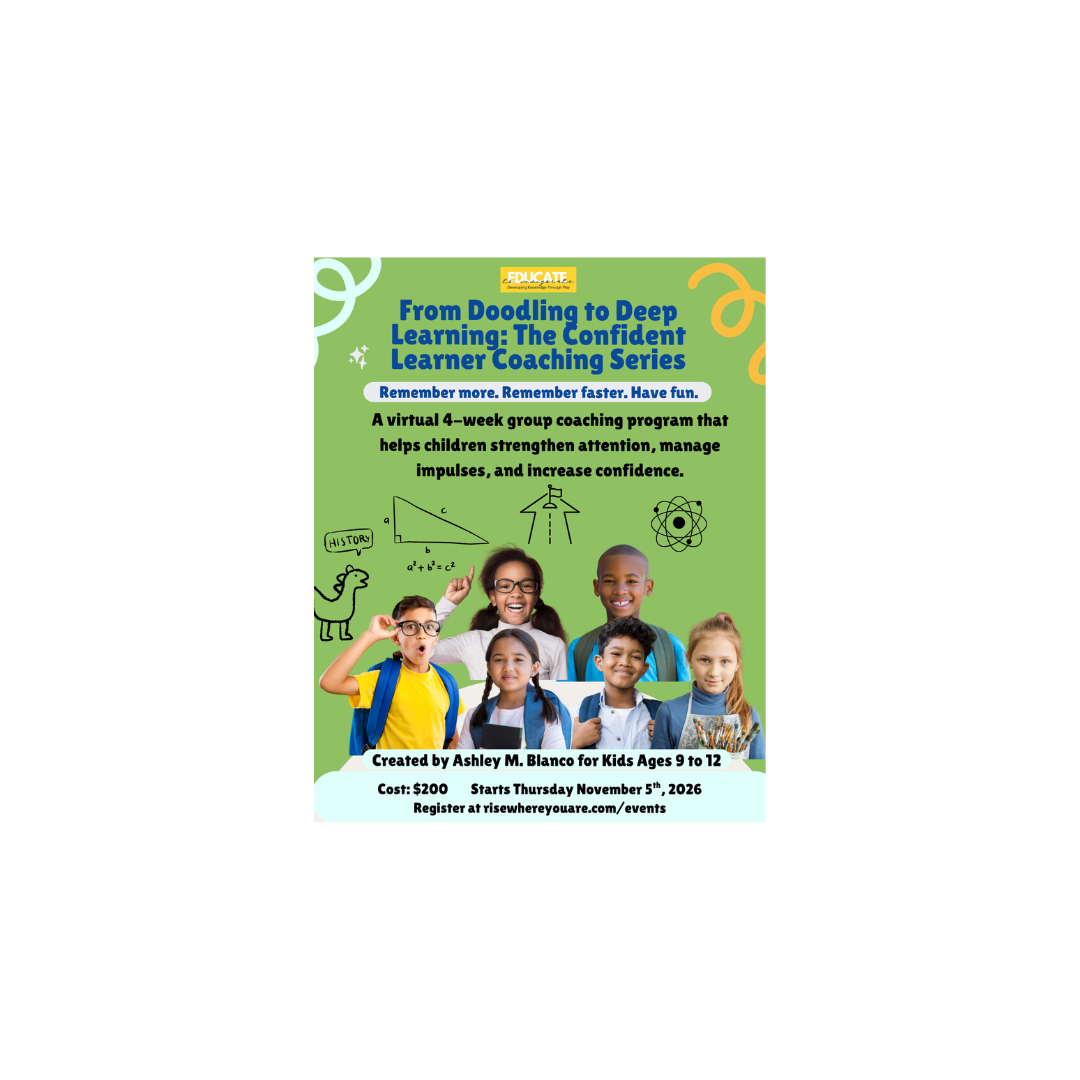
From Doodling to Deep Learning: The Confident Learner Coaching Series
Starts Thursday November 5th, 2026 | 6:00 PM to 7:00 PM PST
From our colleague Ashley Blanco: A new coaching program starts Thursday November 5th and is serving 10 students ages 9 to 12.
With 4 weeks of support, students will remember more, remember faster, and have fun turning doodles into roadmaps for learning. I'll show your kids how I use characters to help me remember more while learning. Drawing these characters also helps me to relax while focusing.
Children practice a repeatable way to approach learning:
Clarify the learning goal
Use mistakes as information
Reduce ideas to what matters most, and
Explain their understanding in their own words.

Events for Autistic Folks & Families in the Bay Area
September & October 2026
Our friends at the San Francisco Bay Area Autism Society have a great lineup of inclusive events lined up!

Adult Ahead: Transition Conference
Saturday, November 7 | 8:30 AM to 3:00 PM PST
City College - Ocean Campus
🎉 Partner Event Alert! 🎉
Got big plans after high school? Let’s map them out together! Whether you're a teen or young adult with a disability (ages 13–26), a family member, or a supportive educator, join us for an inspiring day packed with resources, connection, and real-world tools.
From college and career paths to independent living and decision-making skills—come explore what’s possible and connect with people who totally get it!
the heart of the matter
that time I could have killed my brother
I was 10, maybe 11. I was playing outside with my little brother and some friends. These were the wild 80s when we free-ranged through the neighborhood until the street lights went on. I must have been upset about something, maybe stewing over some perceived slight, or losing one of the many games we invented. My brother buzzed past me on his bicycle and said something. I have no idea what, but it pissed me off. I picked up a rock, threw it, and hit him on the side of the head. He went down hard.
I felt a moment of elation, not that he was hurt, but that my aim was true. The feeling at a carnival when dart pops balloon.

Then horror. There was blood on his head as well as hand and leg from the fall. What had I done? In my memory, both my parents are outside instantly. They are helping him up, taking him inside. My mom looks at me and where I expect to see her anger there is fear and desperation.
My brother was fine. He added those scars to his collection from a daredevil childhood. I don’t remember getting punished. My father talked to me in gentle tones. That night my parents had a hushed and concerned conversation. Later there were visits to a child psychologist and conversations about anger management, frustration tolerance, and impulse control. The psychologist asked me probing questions trying to get to the source of my anger. We never found anything and I still can’t pinpoint some dark origin-story trauma. I was left with a persistent, hollow feeling of shame. What was wrong with me? Was I broken? Was I evil?
That was the last time I threw a rock at someone. But those big feelings stayed with me as I grew up.
There was the time that I got a red card and thrown out of a soccer game… for yelling at my own teammates. To this day, I’m the only person I know with this distinction.
There were the final exam periods in college when I would feel so overwhelmed by stress, that I would sob in the shower.
And there was the greatest crisis in my life. During the pandemic, my 10-year-old son’s mental health spiraled. He grew distant and hostile. Basic requests like “brush your teeth” or “come to dinner” incited explosive confrontations. He would scream, cuss, and break holes in the walls. He would throw things and threaten to hurt us or himself. I reacted by matching his intensity. My instincts told me to fight back, dominate, and seize control. My moods were kerosene on his fire. I knew what I was doing wasn’t working. You can’t scream away a mental health issue. But I didn’t know how to stop. My reaction felt automatic. I felt like I was fighting for survival. I didn’t know another way.
It was around this time, at the age of 50, that I was finally diagnosed with ADHD. As I read about my neurodivergent brain, an important revelation jumped off the page: emotional overwhelm.
As I learned more about ADHD, I started thinking about emotional regulation like brakes. Most of the time, there's a moment between feeling something and acting on it—a chance for the logical brain to say, “Your brother isn’t a threat, he’s just annoying.”
My brakes weren't always very good.
My anger could explode before the thinking part of my brain had time to ask, “Dude, do we really want to throw that rock?”
My emotional overwhelm wasn't evidence of latent evil or a character deficiency. My neurodivergent brain made it harder to check big emotions. When I understood that, I learned strategies to work with my brain. I learned that when my ears felt hot and my jaw clenched these were early warning signals of an emotional explosion. I could read these cues and use strategies to disengage or stay calm. I will now say to my husband, “I’m going into overwhelm. I need to stop talking for a bit.” He’s become great at understanding and supporting this.
I realized that I had been carrying a big bucket of shame on my shoulders. All the rage and embarrassment went into this bucket. I had added the worry that something was wrong with me, and the failures for all the projects I had started and not finished. In went my random flakiness, and the work failures that a well-intentioned executive coach had labeled as self-sabotage.
I set the bucket down and left it behind.
This passage is from a book I’m writing on supporting kids with disabilities in expanded learning programs. This is the heart of our work that The Village Well.
Understanding my ADHD gave me something more useful than shame: a way to notice what was happening and do something different. We can help our students with their brakes. We can help them put fewer things in the bucket. Helping them get better often makes us get better too.
my regular rant against screen time
My friend and colleague Ashley Blanco is a tremendous educator who specializes in working with our neuro-spicy kiddos. Her most recent newsletter offers five tips on how to support your kids with their on-screen school work. Tip #3 is something I’ve never thought of!
we’re obsessed with
My friend Karina is a fantastic writer. She’s a prolific contributor to the two minute “Perspective” feature on KQED radio. Read or listen to her latest piece on dropping her daughter off at college.
We will never achieve school integration if middle and upper class families don’t choose to send their children to the neighborhood public school. That’s what journalist Nikole Hannah-Jones argued in her groundbreaking 2016 article, “Choosing a School for My Daughter in A Segregated City.” 10 years later, her daughter is 16 and has her own ideas about what the right decision was for her education. Their debate and discussion on This American Life is poignant, heartbreaking, funny, and ends in an unexpected place.
Does ketchup go in the fridge or pantry? What about soy sauce? Strawberry jam? FINALLY all your questions answered in this helpful guide from the New York Times.
where we’ve been
Book a workshop for your school or organization
Bring The Village Well to your school or organization. We provide powerful, interactive and fun workshops for parents and/or staff. Learn more

As a child with undiagnosed ADHD, Ed Center experienced firsthand what it’s like to navigate big feelings and behavioral challenges. He founded The Village Well to ensure families and educators have the practical tools and support kids with disabilities and mental health needs deserve. Whether you’re looking to build a more inclusive program or support a child at home, our team is here to help. Schedule a consultation with us today to get started!
FOLLOW THE VILLAGE WELL ON: